Leveraged an inventory of established fictional character and setting elements to generate a disruptive custom-curated narrative entertainment asset.
I worked in HR, handling applications and interviews, and if someone turned in that string of techno babble nonsense, I would have rejected them out of hand.
A resume doesn’t need to sound fancy or overly technical, it needs to tell us why we should hire you.
“Independent novelist/writer” is more than sufficient here. If you want to express the skills that fan fiction taught you, something like, “creative writing, editing, and publication,” will get you a lot further than… Whatever that just was.
A resume should be tailored to the position, if you can afford the time and energy for that. But if not, then just think about what writing for fandom taught you. How to respond to criticism, how to present a professional public face, how to correct punished mistakes, creative thinking, project planning, persuasion via emotional leverage, html formatting, office suite fluency.
There are a lot of actual, marketable skills that go into fan fiction.
Ok so I was looking for historical slang terms for penis (gotta be era-accurate when writing vintage dick jokes) and I came across….something
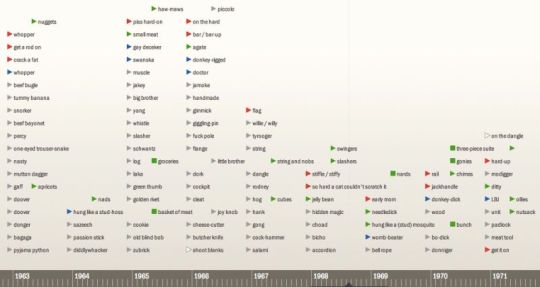
some linguist compiled a literal timeline of genitalia slang–a cock compendium, if you will–that dates back all the way to the fucking 13th CENTURY. This motherfucker tracked the evolution of erection etymology through 800+ years, because if he doesn’t do it, who else will? Thank you for your service, Johnathon Green.
Some of my favorites include:
Shaft of Delight (1700s)
Womb Sweeper (1980s)
Master John Goodfellow (1890s)
Nimble-Wimble (1650s)
Corporal Love (1930s)
Staff of Life (1880s)
Spindle (1530s)
As good as ever twanged (1670s)
Gaying Instrument (1810s)
Beef Torpedo (1980s)
and last but not least, the first recorded use of the word Schlong, which was in 1865 CE. Tag yourself, I’m Nimble Wimble
And are the lovely ladies feeling left out? not to worry! Johnathon’s got you covered, gals, because he also made one for vaginas. Highlights:
Mrs. Fubb’s Parlor (1820s)
Poontang (1950s)
Spunk Box (1720s)
Ringerangroo (1930s)
Ineffable (1890s)
Itching Jenny (1890s)
Carnal Mantrap (1890s – a busy decade apparently)
Bookbinder’s Wife (1760s)
Rough Malkin (1530s)
Socket (1460s)
and a personal favorite, crinkum-crankum, circa approximately 1670.
Below are links to sections of a very long list of events that occurred in the century. If you are looking for major events for the specific period in which your story takes place, the links below will take you to a list that details every significant event that took place, for every single year within that decade.
If you enjoy my blog and wish for it to continue being updated frequently and for me to continue putting my energy toward answering your questions, please consider Buying Me A Coffee.
Ok. I’m tired of the typical vampire, werewolf and fairy.I’m also tired of the occidental-centrism in mythology. Hence, this list.
I tried to included as many cultural variants as I could find and think of. (Unfortunately, I was restricted by language. Some Russian creatures looked very interesting but I don’t speak Russian…) Please, add creatures from your culture when reblogguing (if not already present). It took me a while to gather all those sites but I know it could be more expansive. I intend on periodically editing this list.
Of note: I did not include specific legendary creatures (Merlin, Pegasus, ect), gods/goddesses/deities and heroes.
(I have stumbled upon web sites that believed some of these mythical creatures exist today… Especially dragons, in fact. I just had to share the love and scepticism.)
This is perfect for my latest project ^~^
Idk if it’s stupid or what, but felt like contributing:
OP, Thank you so much for putting this reference together. I’ve been working on an original novel that involves dragons from all over the world, and I’ve been having a hell of a time finding good information on non-European dragons.
All the other information is sure to be helpful for the future, as well, I am sure!
May I contribute: la ciguapa (one of my personal favs)
my aunt talking about her outdoor cats: if they die a few years early because I let them out, so be it
me: -_____________________________-
“the safety of this tiny soft bastard who happens to love me is entirely under my control, but fuck that I guess”
ppl reblogging this post: “but my cats love going outside! I don’t provide any mental stimulation indoors, so they’re MISERABLE when not playing in the street – can’t you see there’s no painfully obvious solution?”
this makes me profoundly stressed cats are living things who absolutely want and should be allowed to go outside if your living situation allows it
me chucking my canary out the window: “you are a living thing who absolutely wants and should be allowed to go outside if my living situation allows it”
Me throwing open my doors: be free, dogs!! May your profound stress be eased!!!!! for my living situation allows you to do so!!!!!!!
Ah yes, let’s let this species cause mass extinctions of local birds in areas they’re not from while letting them drink antifreeze from puddles and climb into car engines and frolic with coyotes, that’ll make them happy
>mass extinction of local birds
Fucking lol
I cannot fathom why you would find it ridiculous that introducing millions of non-native, invasive predators into almost every single country when they have no natural predators just might have an impact on local animals. It is common sense, and conservationists have been telling us for years that cats are one of the leading drivers of extinction in wild birds and small fauna. On the list of predators posing the highest risk to native species, cats rank second, contributing towards the extinction of 63 separate species. You may find it funny that cute, fuzzy little cats pose a threat to wild animals, but the problems they cause for native species is well documented.
and there are ways to let your cat have outdoor access without enabling them to kill off local wildlife or contract illnesses from strays. they’re called catios. if you’re gonna have an “outdoor” cat this is honestly the only acceptable method in my book.
those are some of the higher quality ones but they are all over Pinterest and there are plenty of how-to tutorials out there. the key is high walls, an enclosed roof space, minimal chance of escape, and an easy way for the cat to travel between indoors and the catio as they please, plus all the standard enrichment they’d have with an outdoor area. it might be a bit of effort but it’s worth it.
my Old Man Cat, bless his soul, lived to almost eighteen and was fortunate enough to never contract anything – but he killed so much wildlife in his prime that I don’t doubt for a second the damage that cats can do. I can remember when he was a few months old he caught and killed a scrub jay, and when he was a few years old and we’d moved to Arizona he started to successfully hunt rabbits. I was a kid and didn’t know any better, and neither did my family. he’s very lucky that when he vanished for a week in our mountain “neighborhood” – where bears and mountain lions and foxes lived – during the winter, that he came back in one healthy, albeit skinny, piece. I know better now and I wish I’d known back then.
Does your story feel too rushed? One easy way to control pacing, add suspense, and cue the reader about big changes in your story is to have your main character pause at major thresholds.
Thresholds are literal or figurative doorways that a protagonist walks through at key moments of the story. They represent moments of change: On one side of the “door” the rules are totally different than on the other side. Think Harry Potter going into the Chamber of Secrets, or Katniss Everdeen getting thrown into the Hunger Games. Once those characters “crossed the line,” they couldn’t go back.
In both of those examples, you might have noticed that Collins and Rowling slowed the story down a beat. Katniss had a 60-second delay where she sized up her situation. Harry had to solve a series of puzzles to get to the door. And for good reason: They’d been moving toward that big change for pages and pages, so it would be weird to rush straight across the threshold without a moment’s pause.
So if your story feels like it’s moving at a break-neck speed, look for thresholds or turning points where you can slow down. Show us details. Add another obstacle between your character and their goal. Let us hear their thoughts, hopes, and hesitations as they move into the next phase of their story. Show us why this moment is important. We won’t get impatient–in fact, if you’ve prepared us well enough for the moment, taking a pause will only increase the suspense!
Yes, it has happened. Ms. Markle has married Prince Harry and it is a win for all. Or some shit like that. Fairytales don’t come true. Fantasy is the closest thing you will get to it.
In fantasy, Royal Weddings are not made for love. They are made for:
1. Alliances
Families marry their children to their allies or enemies to form an alliance. Marriages can be seen as a business merger, two companies coming together as one.
2. Acquisitions
Some marriages are made to gain something. Some spouses marry to gain money or lands or power.
3. Dynastic Reasons
Royal families or noble families sometimes marry certain spouses to continue bloodlines or to pass on a certain gene, let’s say a magic power or to pass on a right, like right to the throne.
4. Love
Yes, it does happen. Some marriages can be for love. Peasants even royalty will risk all for love. See the cases of Wallis Simpson and Elizabeth Woodville for ideas. Perhaps fairytales can come true.
Ah, nonnie, that’s a question I asked myself many times. It seems like the Hannibal!verse has 1 month of autumn and 11 months of winter. I’m afraid I can’t tell you the exact time of the year when the finale takes place; it could be anywhere from late autumn to early spring. Since we’re already seen snow in some previous episodes, my guess is somewhere in February, maybe even March. It looks cold, but definitely not Season 2 cold.
We know that filming for season 3 began on October 20, 2014, in Toronto [x], so The Wrath of the Lamb was definitely filmed during winter.
From this article: “In winter, it is cold and snows often. During the winter months (December, January and February), the temperature in most of Toronto is usually below 0°C, day and night. Temperatures can drop below -25°C. Snow can be on the ground from the middle of December until the middle of March.”
Now let’s take a look at some screencaps to help you with weather description / characters’ clothing.
Here we’ve got The Leather Jacket™ and Reba seems to be wearing an autumn coat. It looks warm, but not too warm.
Then we have Will with his dress shirt and light jacket, as opposed to the long coat + scarf + gloves combo from season 2.
Looks pretty dead and barren. There’s no snow though and not much wind either.
Jack is wearing what looks like a light coat as well.
Here we have Marlana looking gorgeous in their coats too, some fog, clouds, but still no sight of snow. You’d expect the kiddo to wear some sort of hat if it were super cold. Looks like it’s not THAT cold.
And finally, more clouds and autumnish tones.
In conclusion:
could be late autumn, winter, or early spring
there’s no snow
the plants are dormant
it’s cloudy
there’s not much wind
cold, but not extremely cold
everyone looks gorgeous in their light coats or jackets
I hope this helps, nonnie! If anyone can provide more concrete information, your addition to this post would be welcome.
If we accept the dates on the Buffalo Citizen (Saturday, Jan 24)/Baltimore Digest articles (Monday, Jan 26) then the Leeds murder took place no later than Jan 23. Jack visits Will the second day after (he tells Will the murder in Buffalo was the night before last, a day short of a lunar month) and either hands off Hannibal’s letter or Hannibal caught Federal Express to get Will the letter with the Buffalo clipping. Jack says to Hannibal he read the letter before deciding to send it on to Will; I do think we’re supposed to accept that he reads it the same night after Jack visits.
That put the Dragon’s attack on Molly and Walter no later than February 22 (ep 311). If we generously give them one week each to get to 312 and 313, that puts TWOTL around March 9.
I spent a ridiculous amount of time trying to work out the timelines and seasons, for similar reasons. I have convoluted notes on the subject but it boils down to this for the seasons:
S1-S2 = October to April
End S2 = April
Hannibal’s surrender at Wolf Trap = February
The bluff = March
I’m going with this for my own head canon but I’m aware that the Hannibal universe is a tricky place when it comes to timey-wimey stuff! Glad to see that it more or less fits in with what @existingcharactersdiehorribly has provided, though! 🙂
Reblogging (again) for this info 🙂 Thank you dear!
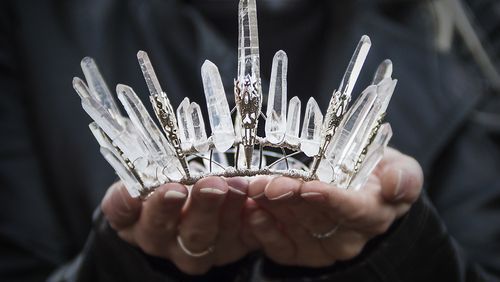
Crown is a general term and can be used to describe whatever headgear you royals sport. But if you want to a certain kind of crown, here are some terms you should know.
Circlet:
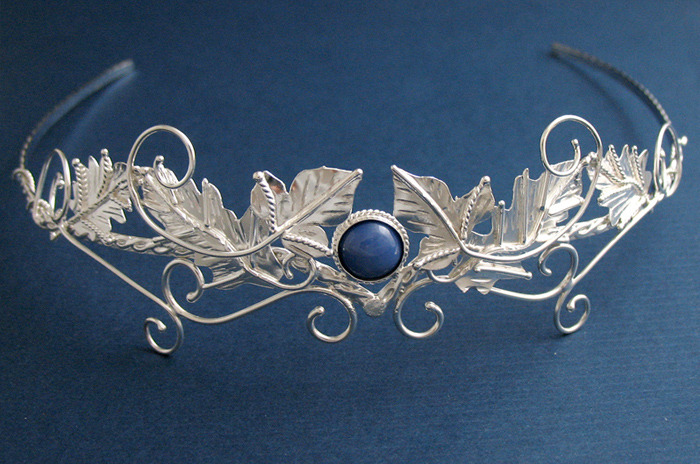
This is a headband. It can be simple or ornate depending on your character’s status in life. Male and female characters can wear these but it is more often worn by women. Ladies from noble families up to princesses can wear these.
Coronet:
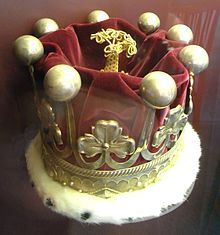
This term is forever used incorrectly. A coronet is the crown of a peer of the realm (lords, dukes, earls). They are only used in ceremonies such as a coronation.
Tiara:
This is a common one. Tiaras are worn by princesses or queens regnant or consorts. Tiaras are not strictly for women, however. George the Fourth of England wore a tiara at his coronation, the same one Queen Elizabeth II wears today.


 Mostly reblogs and random words

